Most spend tools tell a procurement team what they could save. This one tracks how much of it they actually captured — and holds the gap in view.
Every tool in the category produces the same artefact: a number describing money the organisation could theoretically save.
The number is usually large, usually accurate, and usually never collected. Identifying a $3.2M consolidation opportunity is analysis. Renegotiating forty contracts across six categories is work — and it happens outside the tool, over months, by people with other jobs.
So the dashboard that reported the opportunity has no idea whether anything came of it. Procurement teams learn to discount the numbers, and the tool becomes a report nobody acts on.
Before any interface work, I mapped who this served and what each of them was actually trying to decide.
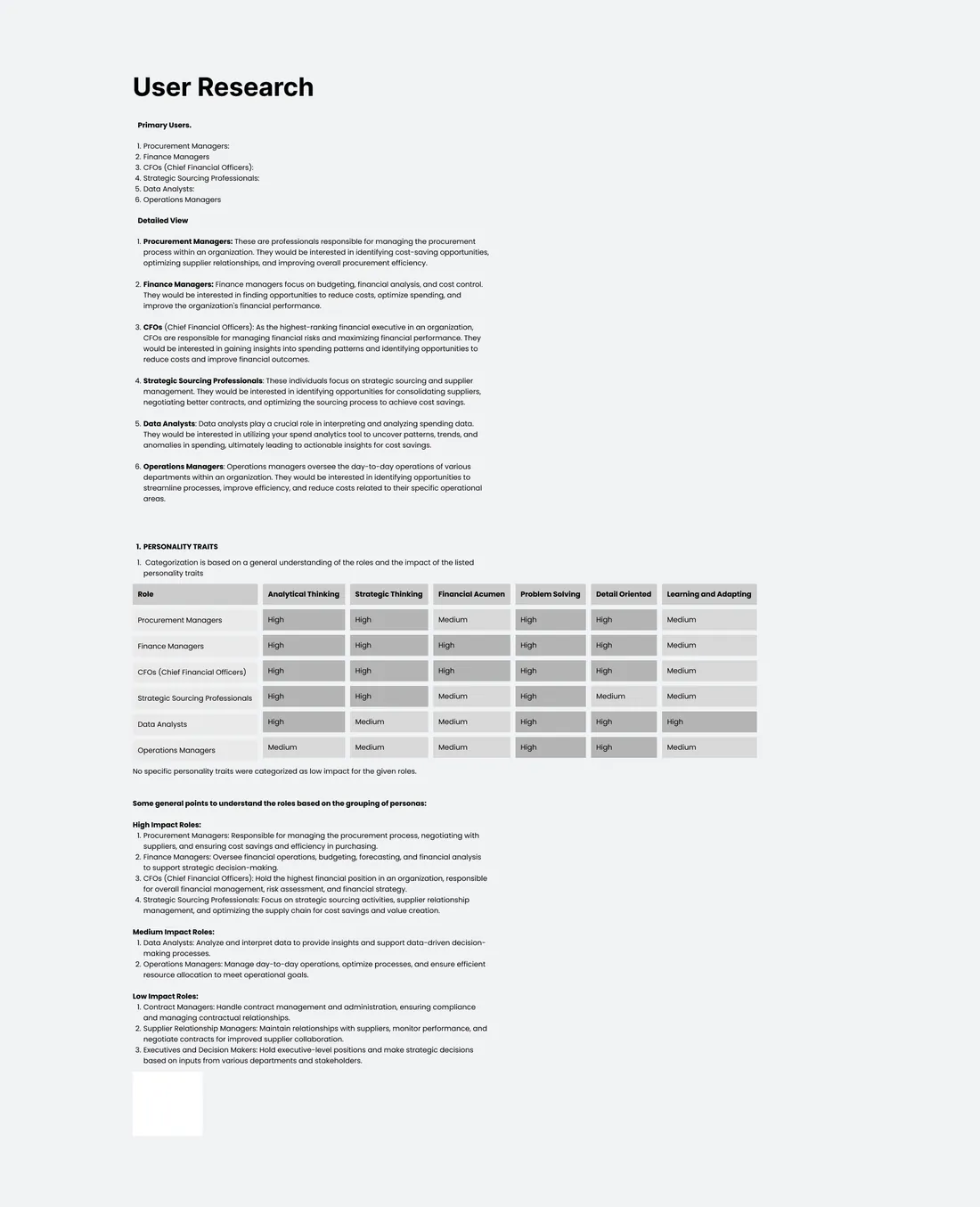
Six primary roles: Procurement Managers, Finance Managers, CFOs, Strategic Sourcing Professionals, Data Analysts, Operations Managers. I scored each against six working traits — analytical thinking, strategic thinking, financial acumen, problem solving, detail orientation, adaptability — then tiered them by impact to decide who the product optimises for when their needs conflict.
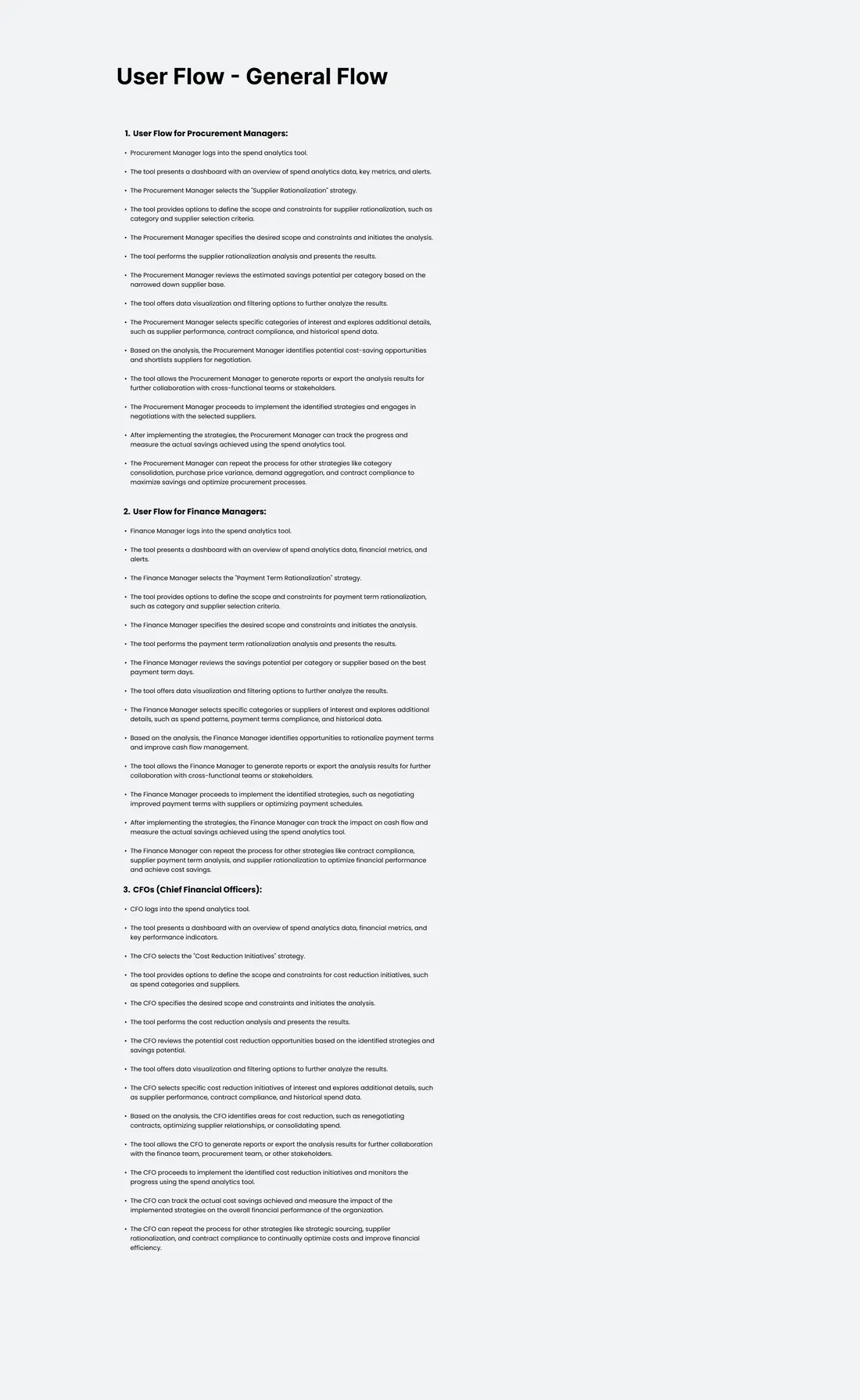
Then a user flow per persona, end to end. A Procurement Manager runs Supplier Rationalization; a Finance Manager runs Payment Term Rationalization; a CFO runs Cost Reduction Initiatives. Same engine, three different entry points and three different definitions of success.
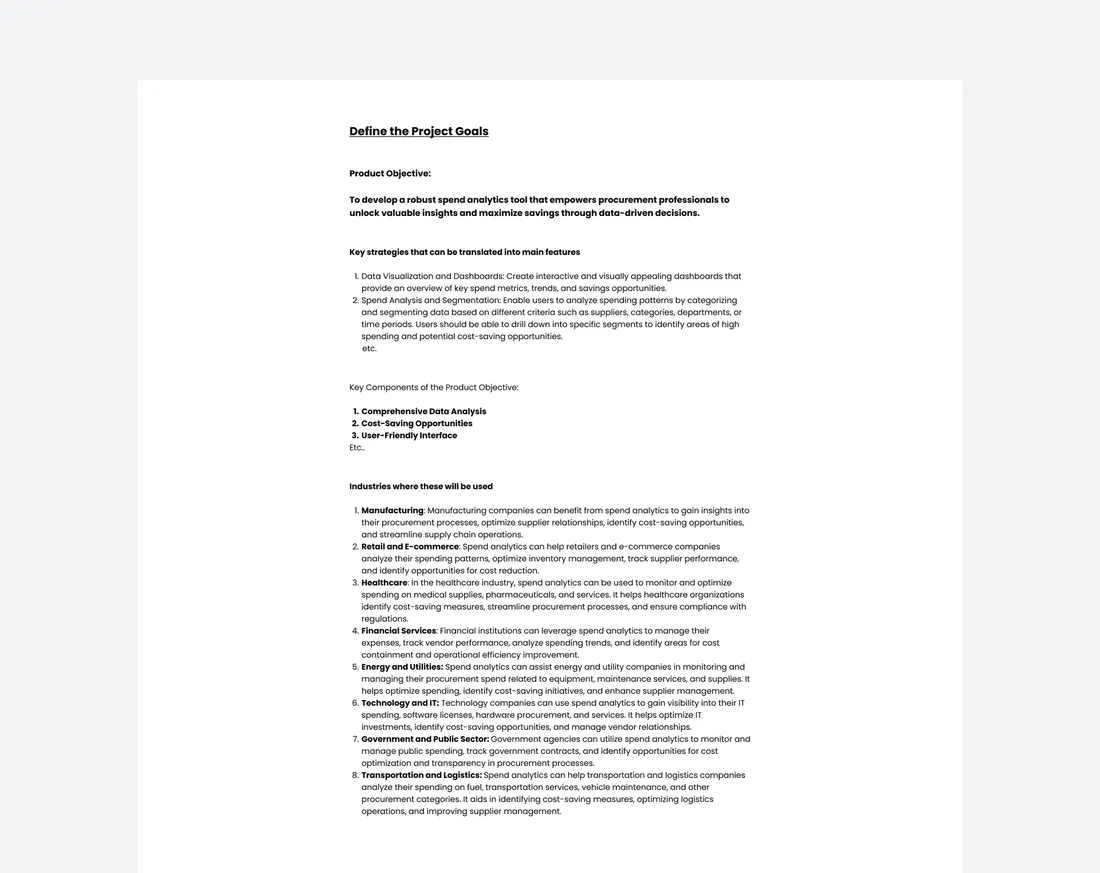
The conventional structure for this product is a dashboard: filters across the top, charts below, insights left to the reader.
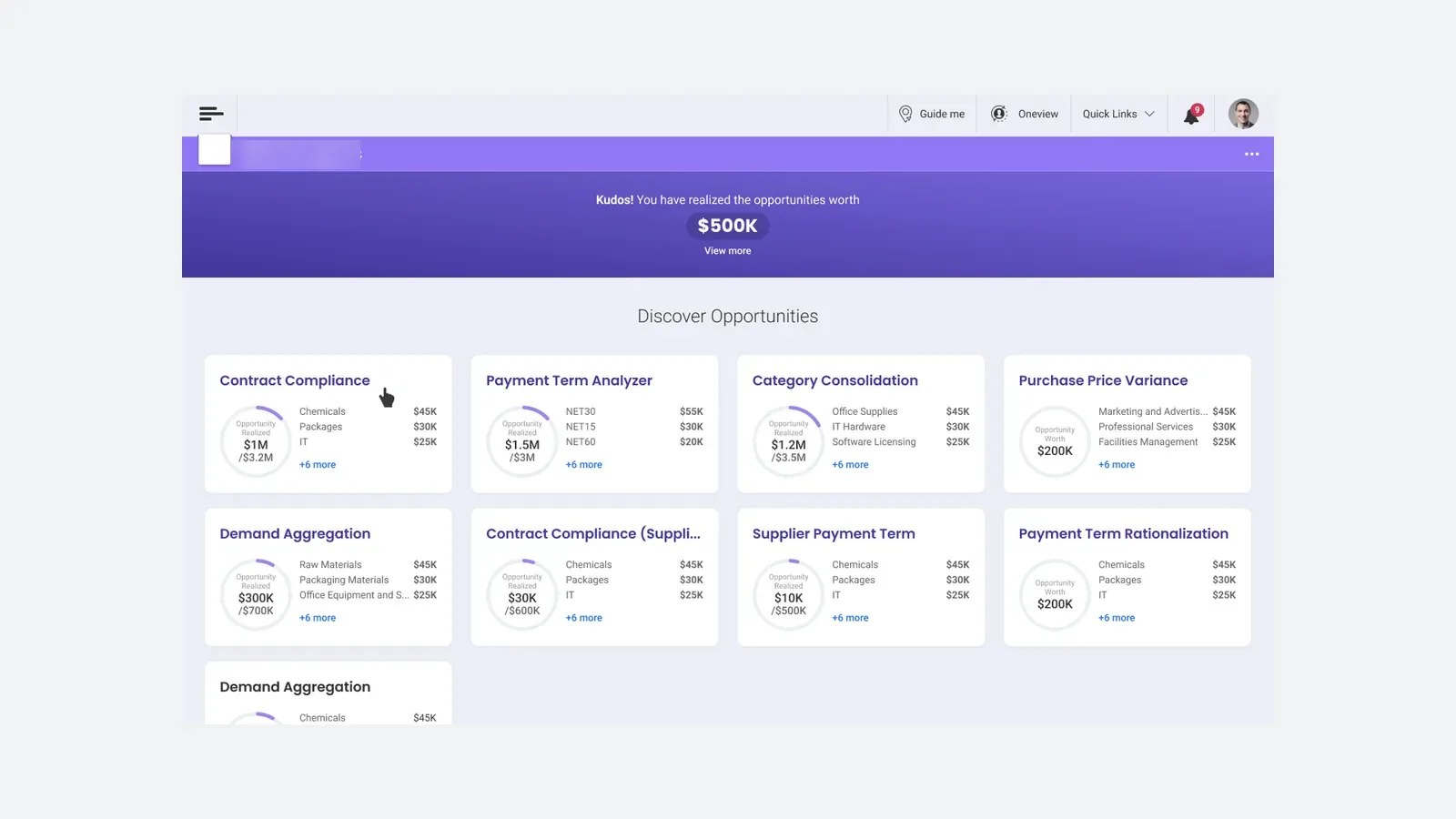
Instead, the home screen is a set of opportunity cards — Contract Compliance, Payment Term Analyzer, Category Consolidation — each one a named savings play with a value attached and a status. Not "here is your spend data." Here are nine specific things worth money, ranked.
The consequence is that the product has a to-do list rather than a reading list. A category manager opens it and sees work, not analysis.
Every opportunity card carries a radial reading $1M / $3.2M — value captured over value found. The gap is the point. It's visible on the home screen, in every card, permanently.
This is an uncomfortable design decision for a vendor: it makes the shortfall between what the software promised and what the customer collected impossible to ignore. That's exactly why it builds trust. A tool that only reports potential is marketing; a tool that reports its own conversion rate is an instrument.
"Kudos! You have realized the opportunities worth $500K"
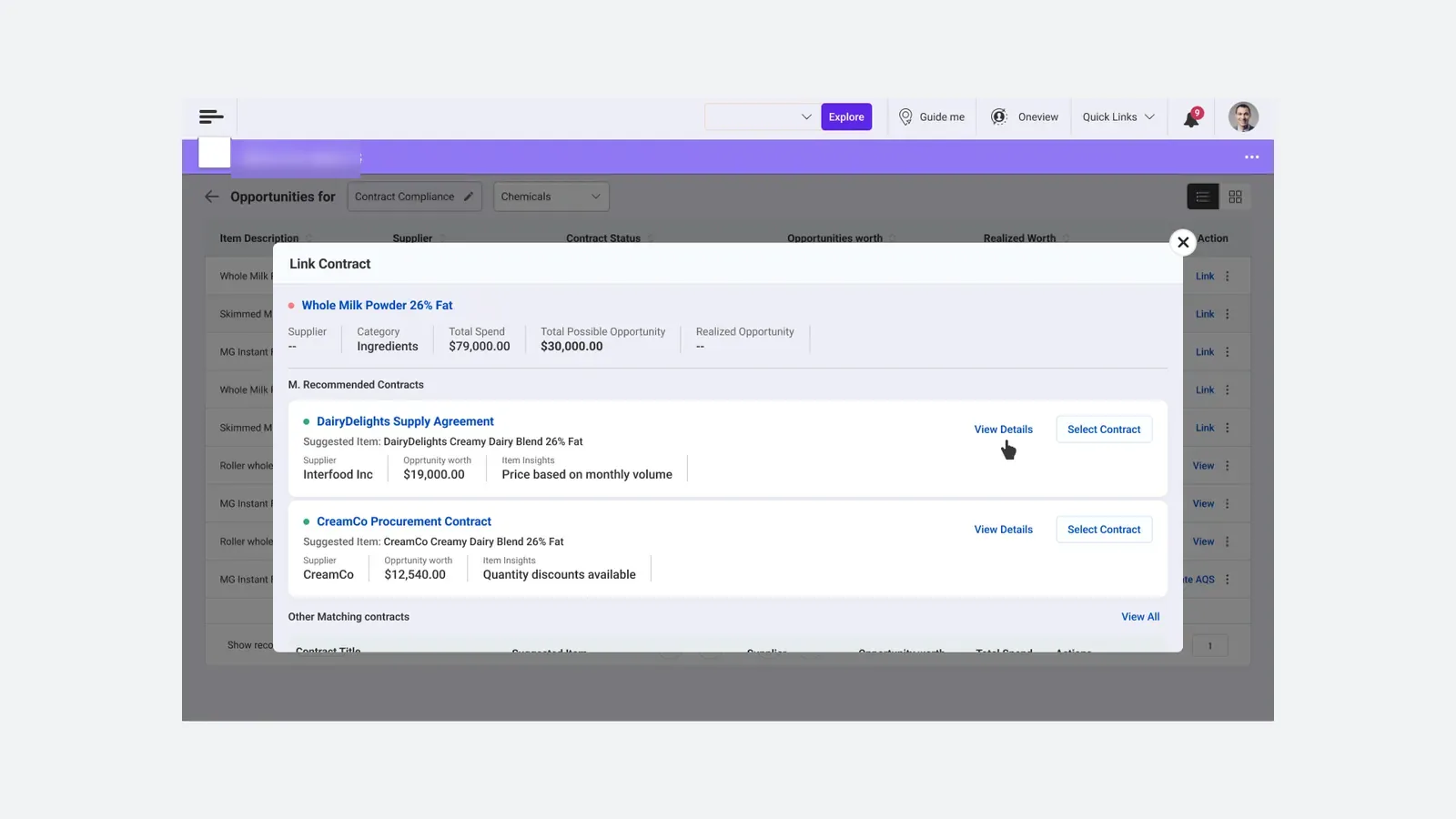
The banner celebrates captured value — not identified valueWhen the system recommends linking a line item to a contract, it doesn't just rank options. Each recommendation shows the supplier, the opportunity worth, and an Item Insight explaining the basis — "Price based on monthly volume," "Quantity discounts available."
A procurement professional will not act on a machine's suggestion about a supplier contract without knowing why it was suggested. The reason isn't a tooltip or a details panel. It sits in the row, at the same level as the number.
The persona flows all run the same analysis over the same spend data. What differs is entry point and framing: a CFO enters through "Cost Reduction Initiatives," a Finance Manager through "Payment Term Rationalization," a Procurement Manager through "Supplier Rationalization."
Naming the same capability in each role's own vocabulary costs nothing structurally and decides whether a CFO believes the product is for them.
The persona work was thorough and it was the wrong kind of thorough.
Six roles, six traits, an impact tier, a flow each — all built from domain knowledge and stakeholder conversations rather than from watching anybody try to capture a savings opportunity. It produced a confident map of who the users were and told me almost nothing about where they'd get stuck.
The realisation gap the product is designed to expose is the clearest example. I can show a team that they captured $1M of $3.2M. I never learned, from a user, what stopped the other $2.2M — whether it was effort, authority, supplier resistance, or the opportunity simply being wrong. That answer would have changed what the product does next, and desk research was never going to produce it.